Automatic full-layer handling from an 80 cans/min line to a stable 9-layer pallet
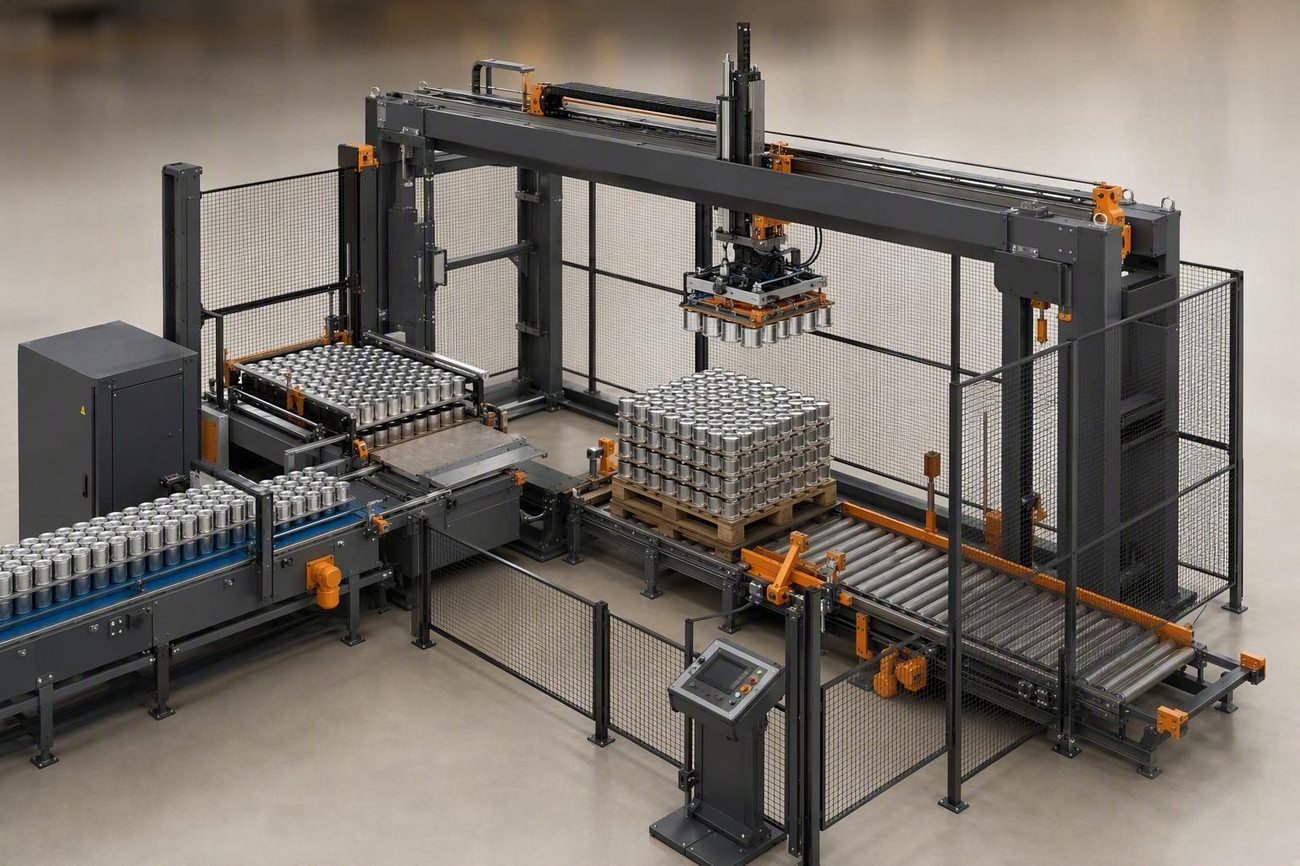
The brief: turn manual can stacking into one repeatable, recipe-driven pallet cycle -- without slowing an 80 cans/min production line.
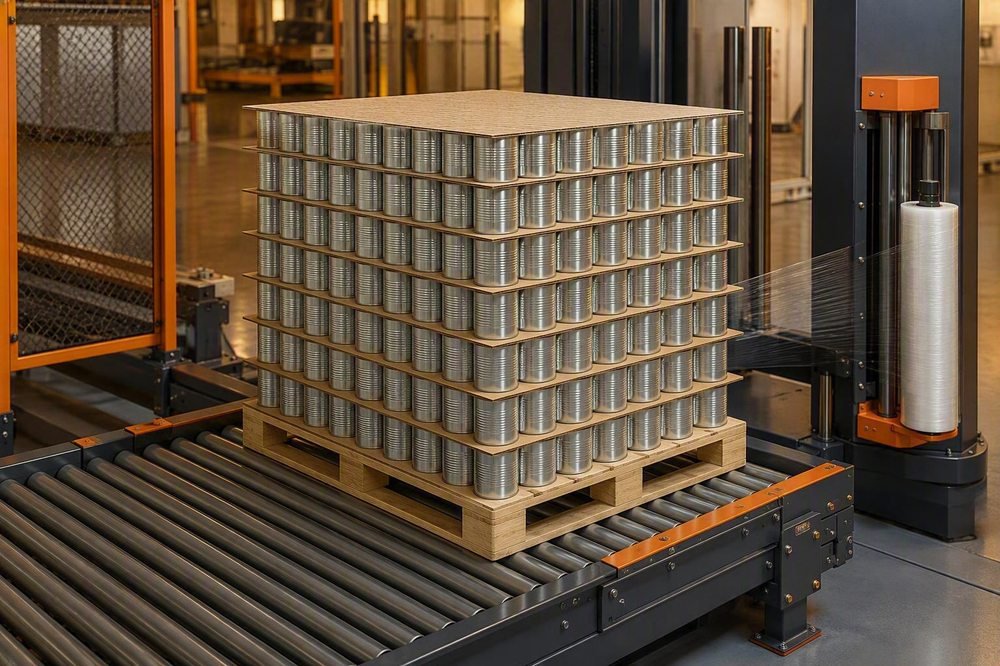
The concept is anchored to a Ø153 x 178 mm tin can running at 80 cans/min, built into a 5 x 6 block pattern (30 cans/layer) across 9 layers on a 1400 x 1120 x 120 mm pallet -- a 2.45 m maximum palletizing height. A servo X-Y-Z gantry with a magnetic layer head and PLC + HMI control forms the operating envelope.
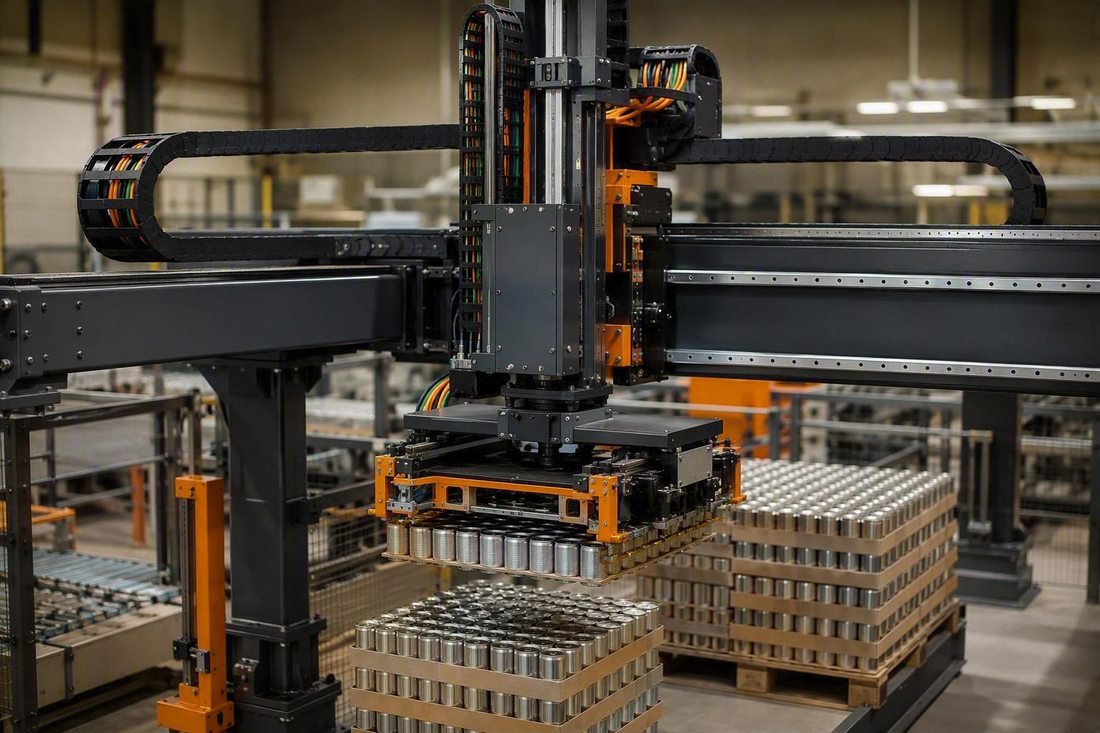
Accumulation, lane guides, and row stops arrange a complete 5 x 6 block on the formation table first. Only a fully counted, aligned layer triggers the magnetic head: magnet on, pickup confirmation, controlled lift, traverse, and release at pallet height -- one pick per layer, not one pick per can.
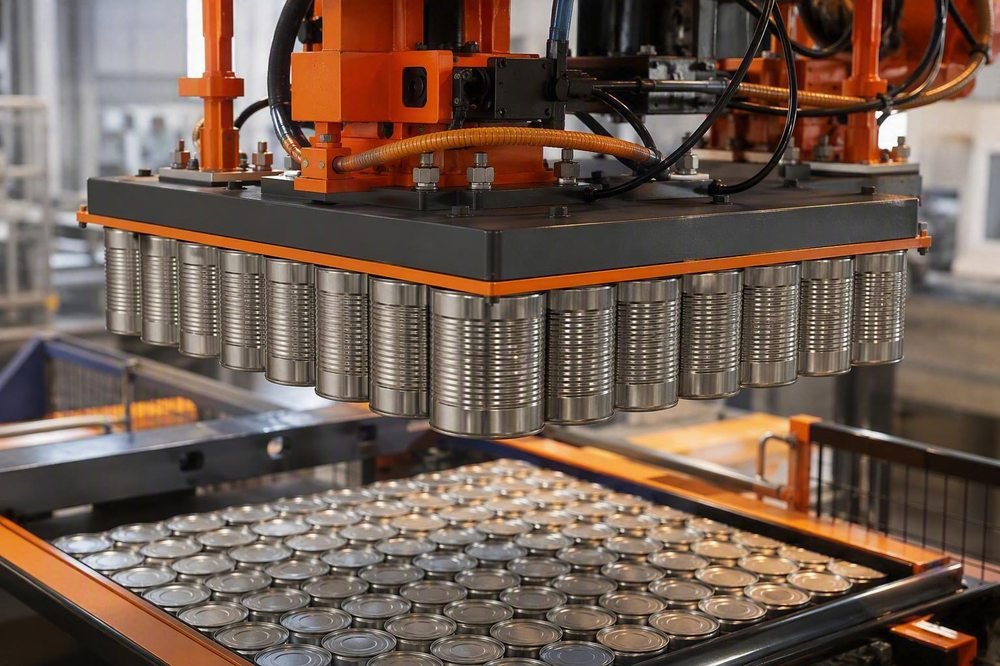
At 80 cans/min and 30 cans/layer, the line produces 2.67 layers every minute -- a 22.5-second window for the gantry to position, lower, confirm the magnet, lift, traverse, deposit, and return safe. Each pallet completes in about 3.4 minutes and finishes at roughly 1.72 m including cardboard interlayers between every layer.
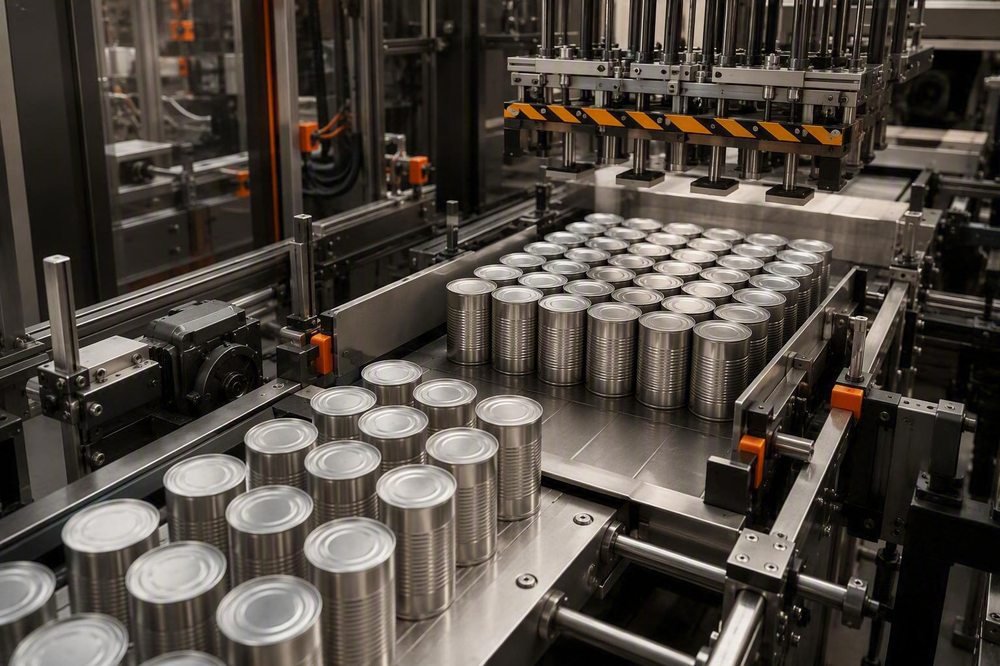
Automatic cardboard interlayers between every can layer reduce layer-to-layer slip and improve transport stability. The finished, discharge-ready pallet moves directly to wrapping or strapping -- nine aligned layers, consistent geometry, and no manual stacking anywhere in the sequence.
Consistent pallet geometry and quality, layer after layer
Reduced manual handling and ergonomic exposure for operators
Integrated wrapping / strapping handoff ready for dispatch
Safety permissive logic: no operator entry means no gantry motion
Case-study design assumptions supplied by customer application data. Preliminary concept — final layer count, cycle time, and payload class are confirmed during detailed application engineering.